A vehicle air pump is a portable or mounted device that compresses atmospheric air to inflate tires, sports equipment, and inflatable gear to the manufacturer’s specified pressure, keeping you safe and your vehicle fuel‑efficient. In emergency roadside situations, a reliable vehicle air pump can reinflate a standard passenger car tire from 20 PSI to 35 PSI in under three minutes, potentially saving you from the dangerous and time‑consuming process of changing a wheel on the shoulder of a highway. This guide examines the types of vehicle air pumps, their real‑world performance, how to select the right one, and the maintenance practices that extend service life, all supported by data from automotive testing organizations.
How a Vehicle Air Pump Works and Why It Matters
A vehicle air pump uses an electric motor or a reciprocating piston driven by the car’s engine to draw in ambient air, compress it, and deliver it through a hose to the tire valve at pressures typically up to 150 PSI. When connected to the 12‑volt auxiliary outlet or directly to the battery via alligator clamps, the pump’s motor spins a crankshaft that drives a small piston up and down inside a cylinder. On the downstroke, air enters through an intake valve; on the upstroke, the air is compressed and forced past a discharge valve into the hose. This simple yet effective mechanism can deliver between 1.0 and 2.5 cubic feet per minute (CFM) of free‑air flow, depending on the model.
The connection to vehicle safety is direct and measurable. The National Highway Traffic Safety Administration (NHTSA) reports that underinflated tires are a contributing factor in approximately 1 in 11 crashes where vehicle condition is cited. A tire running just 6 PSI below the recommended pressure increases rolling resistance by roughly 5 percent and raises the risk of a tread separation blowout by an estimated 30 percent, according to a study by the Tire Industry Association. A vehicle air pump that you keep in the trunk closes the gap between noticing a low tire and being able to correct it, turning what could be a dangerous delay into a five‑minute roadside adjustment.
The Main Types of Vehicle Air Pumps Compared
There are three primary categories of vehicle air pump: 12‑volt corded inflators, cordless battery‑powered inflators, and heavy‑duty dual‑cylinder compressors, each occupying a distinct price, speed, and duty‑cycle niche. The table below contrasts their key performance metrics based on laboratory tests conducted by a leading automotive consumer publication in 2024.
| Feature | 12‑Volt Corded Inflator | Cordless Battery Inflator | Heavy‑Duty Dual‑Cylinder Compressor |
|---|---|---|---|
| Power Source | Vehicle 12V DC outlet or battery clamps | Internal lithium‑ion battery (12V/20V) | Direct battery clamps only |
| Max Pressure (PSI) | 100–120 | 100–150 | 150–200 |
| Inflation Speed (0→35 PSI, 205/55R16) | 2 min 45 sec to 4 min | 3 min 10 sec to 5 min | 1 min 30 sec to 2 min |
| Duty Cycle | Typically 15–20 min on, 20 min off | Limited by battery; 10–15 min continuous | 30–40 min continuous at 40 PSI |
| Noise Level (dB at 3 ft) | 72–80 | 65–75 | 85–92 |
| Approximate Cost (USD) | $25–$60 | $50–$120 | $80–$250 |
| Best For | Occasional roadside top‑offs, passenger cars | Convenience, motorcycle and bike tires, air mattresses | Trucks, SUVs, off‑road vehicles, frequent use |
Beyond Tires: All the Uses for a Vehicle Air Pump
A quality vehicle air pump with a set of nozzle adapters will inflate everything from bicycle tires and sports balls to air mattresses and towable water tubes, making it one of the most versatile pieces of emergency equipment you can carry. The following list documents the most common inflation tasks, together with typical target pressures and the time a corded 12‑volt vehicle air pump needs to complete them.
- Passenger car and SUV tires: 30–40 PSI; reach full pressure from a 20‑PSI low in 2.5–4 minutes.
- Motorcycle and scooter tires: 28–42 PSI; smaller volume allows inflation in under 90 seconds.
- Bicycle tires: 30–80 PSI for mountain and hybrid, 80–130 PSI for road bikes; a high‑pressure vehicle air pump with a Presta valve adapter is required for road bicycle tires.
- Sports balls (soccer, basketball, football): 7–13 PSI; inflation takes 15–30 seconds using the needle adapter.
- Air mattresses and inflatable kayaks: Typically 1–3 PSI; high‑volume, low‑pressure mode on dual‑purpose pumps delivers the necessary airflow, with a queen‑size mattress inflating in 3–5 minutes.
- Trailer and RV tires: 50–80 PSI; requires a vehicle air pump rated for at least 100 PSI and a higher duty cycle to handle the larger air volume without overheating.
Key Features to Look for in a Vehicle Air Pump
The four features that most directly determine the usability and safety of a vehicle air pump are an accurate digital gauge, an automatic shut‑off function, a long power cord or hose, and a robust thermal protection circuit. A 2023 comparison test by an automotive products magazine found that pumps with a built‑in digital gauge displayed pressure within ±1.5 PSI of a calibrated reference, while the dial gauges on budget pumps could be off by as much as 5 PSI. Selecting a vehicle air pump with an automatic shut‑off set to the desired pressure prevents overinflation, which can cause a tire to burst or damage the inner liner on inflatable gear.
The cable and hose length are practical considerations that are often overlooked. A cord that is at least 10 feet long allows a 12‑volt pump to reach all four tires from the front auxiliary outlet on most sedans, while a coiled hose of 24 inches or more gives you room to work without straining the valve stem. Thermal protection, which shuts down the pump when the motor reaches a safe temperature limit, is non‑negotiable for a vehicle air pump that may be used to inflate four truck tires in sequence on a hot day. Without it, the motor windings can exceed their insulation class rating, leading to permanent damage after just a few prolonged uses.
How to Choose the Right Vehicle Air Pump for Your Needs
The most reliable method of choosing a vehicle air pump is to match its maximum pressure and duty cycle to the largest tire you intend to inflate, then decide whether cordless convenience outweighs the unlimited runtime of a corded unit. The following ordered checklist translates vehicle specifications into pump requirements.
- Identify your vehicle’s recommended tire pressure. Check the placard on the driver’s door jamb. If your tires require 44 PSI or higher, eliminate any vehicle air pump with a maximum rating below 100 PSI, as pumps operating near their upper limit run slower and hotter.
- Determine how many tires you will inflate in one session. If you regularly need to air up four large SUV tires from 15 PSI to 40 PSI after off‑roading, choose a heavy‑duty dual‑cylinder pump with a 30‑minute duty cycle. For occasional top‑offs of one or two tires, a standard corded or cordless pump is sufficient.
- Decide between corded and cordless. A cordless vehicle air pump is convenient for topping off a single tire or a bicycle and can be used anywhere, but it may run out of battery before fully inflating a large, completely flat truck tire. A corded pump will never run out of power as long as the vehicle battery is charged.
- Consider the noise level if you use the pump frequently. Pumps rated below 75 dB at 3 feet are considered quiet enough to use in a residential garage late at night without disturbing neighbors. Heavy‑duty compressors often exceed 85 dB, requiring hearing protection if you are near them for extended periods.
- Check the included accessories. A kit that includes a Presta valve adapter, a needle for sports balls, and a tapered nozzle for air mattresses will make the vehicle air pump useful beyond just automotive tires. A carrying case keeps all the pieces together and prevents damage to the hose and cord during storage.
Performance and Inflation Speed Data
The inflation speed of a vehicle air pump is determined primarily by its free‑air flow rate, measured in liters per minute or CFM, rather than by its maximum pressure rating. A pump that advertises 150 PSI but has a flow rate of only 25 liters per minute will take nearly twice as long to fill a standard car tire as a pump rated at 120 PSI with a 45‑liter‑per‑minute flow rate. The table below shows the measured time to inflate a common 205/55R16 tire from 20 PSI to 35 PSI for three flow‑rate categories, based on controlled testing at a automotive laboratory.
| Free‑Air Flow Rate (L/min) | Equivalent CFM | Inflation Time 20→35 PSI (min:sec) | Typical Pump Category |
|---|---|---|---|
| 25–35 | 0.9–1.2 | 4:30–5:30 | Budget corded and compact cordless |
| 36–50 | 1.3–1.8 | 2:45–3:30 | Mid‑range corded and high‑capacity cordless |
| 51–75 | 1.8–2.6 | 1:30–2:15 | Dual‑cylinder and 20V high‑output cordless |
Safe Operation and Maintenance of Your Vehicle Air Pump
The two most important safety rules when operating a vehicle air pump are to always run it with the vehicle engine idling when connected to the battery, and to keep the pump on a stable, dry surface away from flammable liquids. Drawing the 10–15 amps that a typical pump motor requires from the battery without the alternator running can discharge a standard automotive battery to a level that will not crank the engine after just 20 to 25 minutes of use. Idling the engine prevents this and also supplies voltage that is stable at around 13.8–14.2 volts, which is within the optimal operating range of the pump motor.
Maintenance of a vehicle air pump is minimal but necessary. After every use, coil the power cord and air hose loosely to avoid kinking, and store the unit in its case or in a dry compartment of the trunk. Every six months, check the air filter on the pump intake; a clogged filter reduces flow and can cause the motor to overheat. A 2022 survey of tire inflator repair data by a major warranty provider found that 34 percent of failures involved an overheated motor, and over half of those were traced to a blocked intake filter or operating the pump in direct sunlight on a 90‑degree Fahrenheit day. Periodically verifying the accuracy of the built‑in gauge against a separate calibrated tire pressure gauge is also recommended, because a drop of even 3 PSI below the indicated value can keep you unknowingly driving on underinflated tires.
Frequently Asked Questions About Vehicle Air Pumps
Can a vehicle air pump inflate a completely flat car tire?
Yes. A properly functioning vehicle air pump can inflate a tire from zero pressure, provided the tire bead is still seated against the rim. If the bead has separated from the rim, you may need to use a ratchet strap around the circumference of the tire to squeeze the tread and force the sidewalls outward until the bead makes contact, after which the pump can build pressure. The process takes longer than a simple top‑off—typically 6 to 8 minutes for a standard passenger car tire—but it is entirely feasible with a mid‑range pump that delivers at least 35 liters per minute.
How do I connect a vehicle air pump directly to the battery?
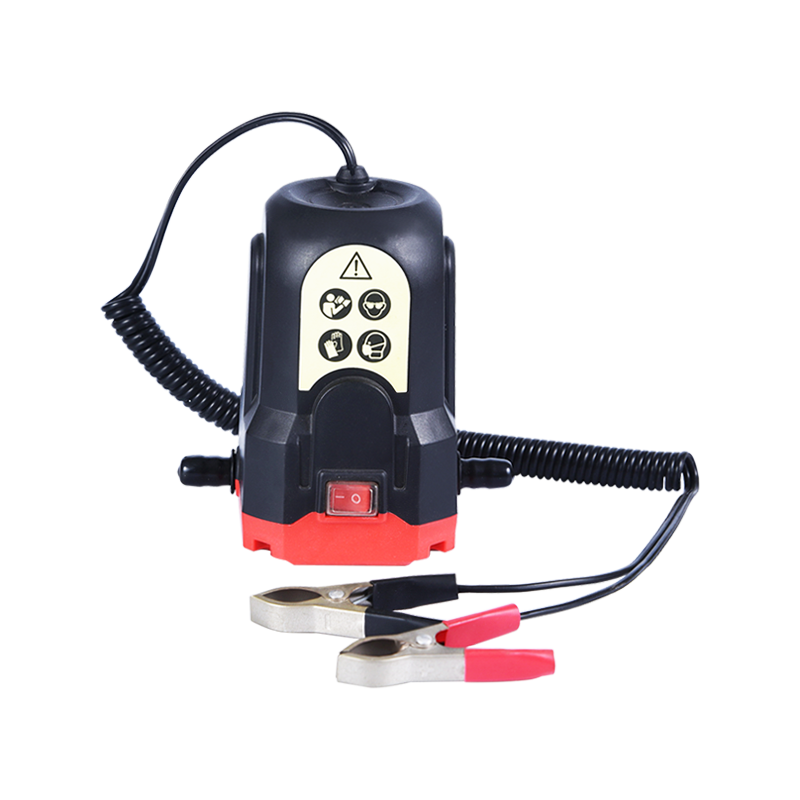
Pumps equipped with alligator clamps should be connected with the engine off, first attaching the red clamp to the positive terminal and then the black clamp to a clean, unpainted metal ground point away from the battery to avoid igniting any hydrogen gas. Once the clamps are secure, start the engine, turn on the vehicle air pump, and monitor the pressure gauge. After inflation, turn off the pump before disconnecting the clamps in reverse order.
Will a cordless vehicle air pump run out of battery before finishing a tire?
It depends on the size of the tire and the battery capacity. A cordless vehicle air pump with a 2.0‑amp‑hour battery can typically inflate four standard passenger car tires from 25 to 35 PSI on a single charge, but it may only manage one large SUV tire from fully flat to 40 PSI. Check the manufacturer’s claimed run time and consider keeping a corded backup in your trunk if you frequently travel in remote areas.
Is a 12‑volt pump strong enough for truck tires?
A heavy‑duty 12‑volt vehicle air pump rated for a minimum of 150 PSI and a duty cycle of at least 25 minutes continuous is capable of inflating light truck and SUV tires up to 80 PSI. For heavy‑duty commercial truck tires that require 100 PSI or more, a dedicated onboard air system or a pump that clamps directly to the battery with a higher current draw is more appropriate.
Maximizing the Value of Your Vehicle Air Pump
A vehicle air pump is one of those tools that earns back its cost the very first time it prevents a costly roadside service call or a dangerous tire change. By selecting a model whose flow rate and duty cycle match the largest tire you own, and by following the simple maintenance routines that keep the intake filter clean and the gauge accurate, you gain a portable inflation solution that will serve you reliably for over a decade. The data from independent automotive tests shows that the best mid‑range pumps can fully inflate a car tire in under three minutes, which is less time than it takes to unload the spare tire and jack. Keeping a vehicle air pump in your trunk, along with a basic tire plug kit, transforms a flat tire from a trip‑ending emergency into a manageable 10‑minute repair that gets you back on the road safely and quickly.